
2016 FORD Transit Connect Recalls & Safety Issues
Official recalls, technical service bulletins (TSBs), and safety issues from the National Highway Traffic Safety Administration (NHTSA).
VIN Decoder
As an Amazon Associate, ForCar.org earns from qualifying purchases.
All Recalls
Ford Motor Company (Ford) is recalling certain 2016-2017 Transit Connect vehicles. The front driver and/or passenger seat belt pretensioner initiators could contain an improper generant mix ratio that may prevent the seat belt pretensioners from deploying in the event of a crash.
NHTSA 20V305000Ford Motor Company (Ford) is recalling certain 2011-2014 Fiesta, 2013-2014 Fusion, 2015 Mustang, 2013-2015 Escape and C-Max, 2012-2015 Focus, 2014-2016 Transit Connect, 2013-2014 Lincoln MKZ, and 2015 MKC vehicles. These vehicles were previously recalled and repaired under recalls 15V-246, 16V-643 or 17V-210, however the repair may not have been completed properly. A component within the door latches may break making the doors difficult to latch and/or leading the driver or a passenger to believe a door is securely closed when, in fact, it is not.
NHTSA 20V331000Ford Motor Company (Ford) is recalling certain model year 2014-2017 Transit Connect vehicles equipped with a Panoramic Fixed-Glass Vista roof. An improper bond may exist between the panoramic roof and the vehicle body and may result in wind noise, water leak, and in some cases, separation from the vehicle.
NHTSA 20V260000Ford Motor Company (Ford) is recalling certain 2013-2021 Transit Connect vehicles equipped with 2.5L engines. The bushing that attaches the shifter cable to the transmission may degrade or detach.
NHTSA 21V376000Ford Motor Company (Ford) is recalling certain model year 2016 Transit Connect vehicles manufactured February 22, 2016, through June 16, 2016. The brake Hydraulic Control Unit (HCU) pump may be contaminated with metallic debris. As such, these vehicles fail to conform to Federal Motor Vehicle Safety Standard (FMVSS) number 126, "Electronic Stability Control Systems."
NHTSA 16V482000Ford Motor Company (Ford) is recalling certain model year 2012-2015 Ford Focus, 2013-2015 Ford Escape and Ford C-MAX, 2015 Lincoln MKC and Ford Mustang, and 2014-2016 Ford Transit Connect vehicles. A component within the door latches may break, preventing the doors from latching and/or leading the driver or a passenger to believe a door is securely closed when, in fact, it is not.
NHTSA 16V643000Ford Motor Company (Ford) is recalling certain 2016 and 2020 Transit Connect vehicles. The front windshield may have been manufactured with inadequate adhesion to the vehicle body structure.
NHTSA 22V192000Ford Motor Company (Ford) is recalling certain 2013-2019 Escape, 2013-2018 C-Max, 2013-2016 Fusion, 2013-2021 Transit Connect, and 2015-2018 Edge vehicles. The bushing that attaches the shifter cable to the transmission may degrade or detach.
NHTSA 22V413000Ford Motor Company (Ford) is recalling certain 2014-2016 Transit Connect vehicles. The front door latch pawl may crack and prevent the door from latching.
NHTSA 23V502000Ford Motor Company (Ford) is recalling certain 2015-2019 Lincoln MKC, Mustang, F-350 SD, F-250 SD, F-450 SD, 2015-2017 Lincoln Navigator, Expedition, 2015-2018 Edge, Transit Connect, 2016-2019 F-550 SD, Transit, 2017-2019 Econoline, and 2019 Ranger vehicles. The rearview camera may display a distorted, inverted, or blank image when the vehicle is in reverse.
NHTSA 25V572000Where to Find VIN for Recall Check
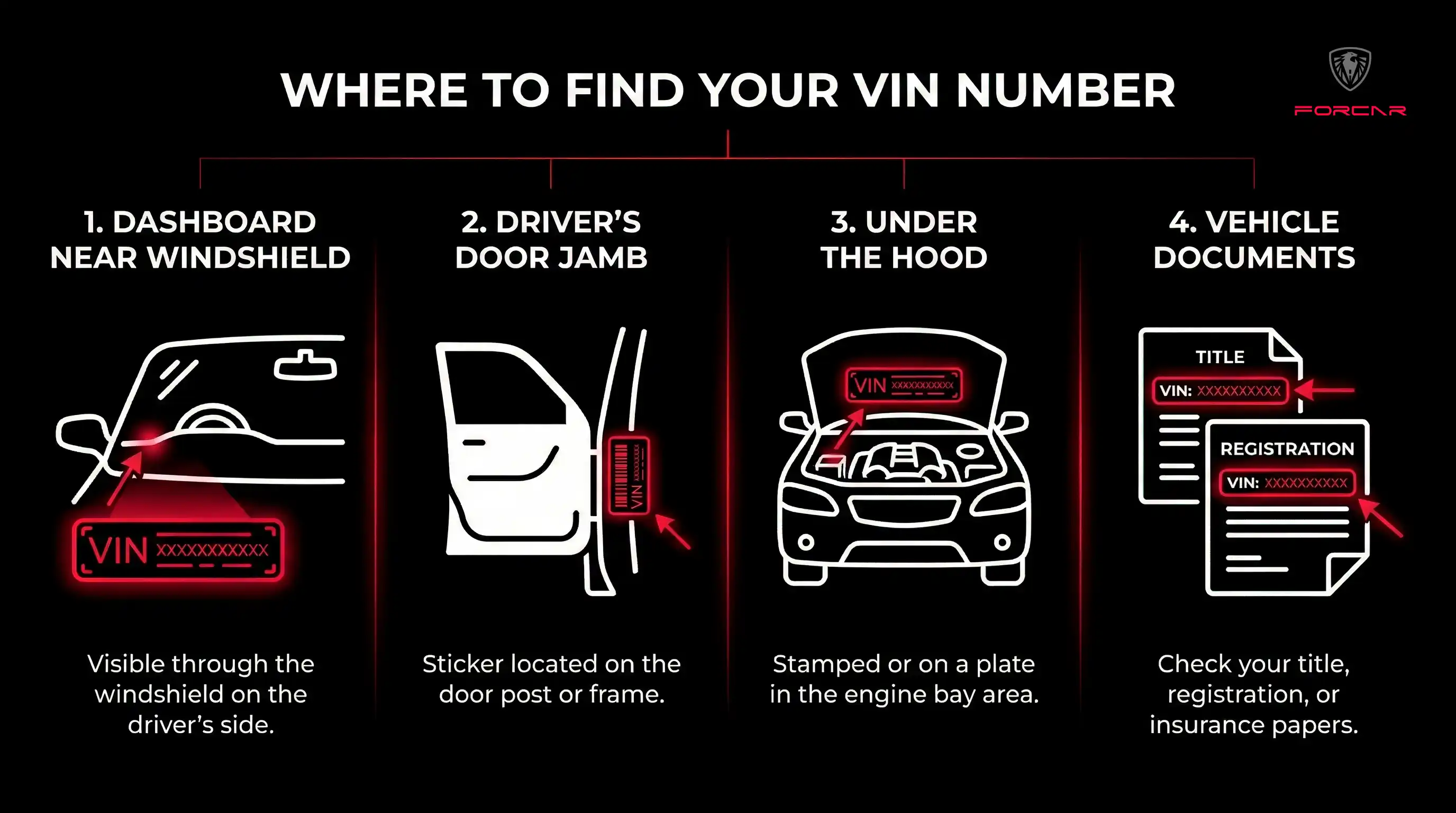
To check for recalls on your 2016 FORD Transit Connect, you'll need the VIN number. Find your VIN in one of these 4 common locations.
Understanding VIN Structure for Recall Verification
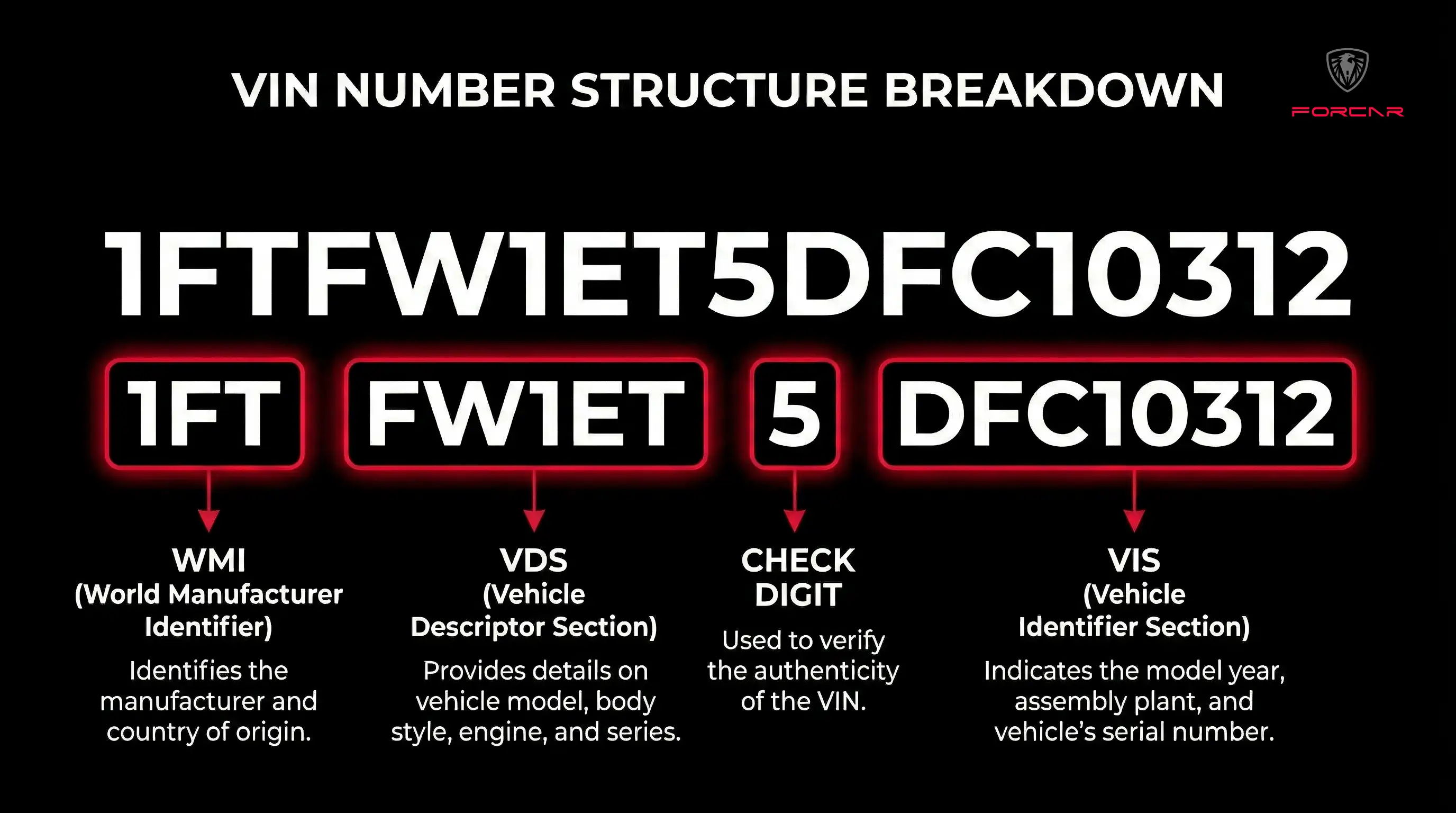
Each character in your 2016 FORD Transit Connect 17-digit VIN helps identify specific recalls affecting your vehicle. Learn how the VIN structure works for accurate recall lookup.
How to Check 2016 FORD Transit Connect Recalls in 3 Steps
Locate Your VIN
Find the 17-character VIN on your 2016 FORD Transit Connect dashboard (visible through windshield), door jamb, engine bay, or vehicle documents.
Enter VIN in Checker
Input your VIN into our free recall checker tool above to search NHTSA database for safety recalls, TSBs, and service campaigns specific to your vehicle.
Review & Schedule Repair
Check the recall details including affected components, consequences, and remedy. Contact your FORD dealer to schedule free recall repair appointment.
Frequently Asked Questions
How many recalls does the 2016 FORD Transit Connect have?
The 2016 FORD Transit Connect currently has 10 recalls according to NHTSA records. All recall information is sourced directly from the National Highway Traffic Safety Administration database.
Are 2016 FORD Transit Connect recalls free to fix?
Yes! All safety recalls for 2016 FORD Transit Connect vehicles must be repaired free of charge by authorized dealers, regardless of vehicle age or mileage. Contact your local FORD dealer to schedule a recall repair.
How do I check if my 2016 FORD Transit Connect has open recalls?
You can check for open recalls by entering your VIN (Vehicle Identification Number) in our VIN decoder tool. The 17-character VIN can be found on your vehicle registration, insurance card, or on the driver's side dashboard visible through the windshield.
Where can I find my 2016 FORD Transit Connect VIN number?
Your 2016 FORD Transit Connect VIN is located in 4 places: (1) Dashboard near windshield on driver's side, (2) Driver's door jamb sticker, (3) Engine bay, (4) Vehicle registration and insurance documents.
What should I do if my 2016 FORD Transit Connect has a recall?
Contact your nearest FORD dealership immediately to schedule a free recall repair. Bring your vehicle registration or VIN number. All safety recalls must be fixed free of charge by the manufacturer, regardless of vehicle age or mileage.
Are NHTSA recalls mandatory to fix on 2016 FORD Transit Connect?
While not legally required for vehicle owners to fix recalls, it's strongly recommended for safety. However, dealerships and manufacturers must offer free repairs for all official NHTSA recalls on 2016 FORD Transit Connect vehicles.